“Give me your tired, your poor …

… Your huddled masses yearning to breathe free.”

— Emma Lazarus, The New Colossus

It was Saturday afternoon and I was racking my brain for an idea for my next blogpost. The pressure was mounting since I try to post at least twice a week and the last post was on Wednesday … and then I Skyped with my mom.

“Did you see the Statue of Liberty celebrations?”

“Um. No. What was that about?”

“Yesterday was her 125th birthday.”

Voilà ! Merci maman !

It’s hard to think of a more iconic symbol of the United States than the Statue of Liberty. From postage stamps to commemorative coins to old New York state license plates to television and films, it is an unmistakable image that evokes America. Almost everyone knows that the statue was a gift from the people of France to the people of the United States, but the details of the story are always more fuzzy once we leave grade school. And most Americans aren’t aware that, right here in Paris, we have our very own replica one fourth the size of the original in New York. It was made by the sculptor using one of his design moulds and was presented to the city of Paris in 1889 by the American community living here to commemorate the centennial of the French Revolution. Just this afternoon, I ventured out to the Île aux Cygnes, a narrow island in the Seine just downriver from the Eiffel Tower, to take a look at the replica for the very first time.

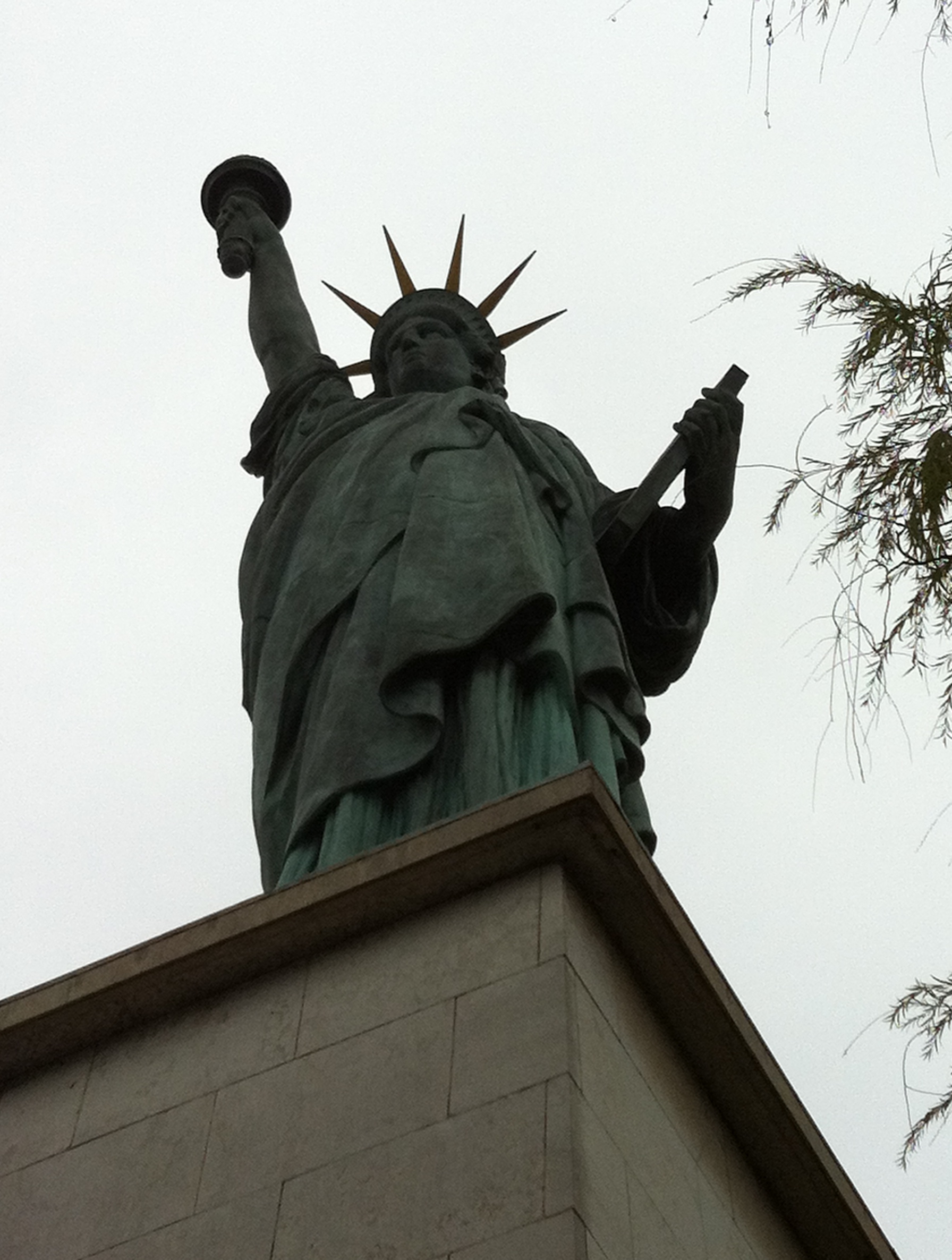
La Statue de la Liberté, Île aux Cygnes © 2011 Samuel Michael Bell, all rights reserved

Having been inspired by my little afternoon excursion, I came home to finish up this post, the backstory of Lady Liberty’s 21-year voyage from idea to icon.
Continue reading “Give me your tired, your poor …

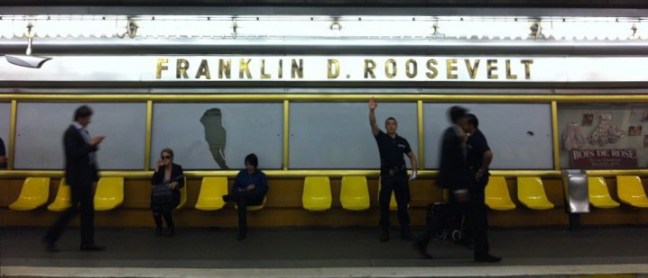
Cold War on Line 7?

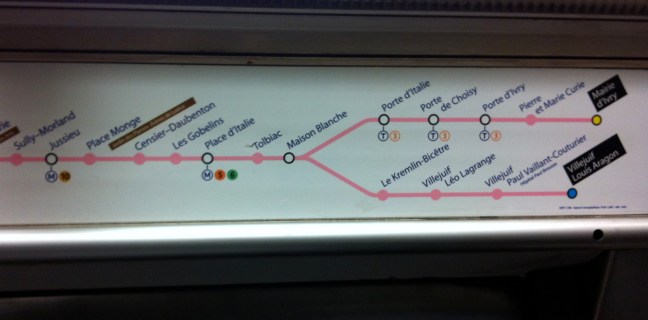
I live in La Courneuve, at one end of line 7 of the Paris Métro. I spend a lot of time riding on that line, looking at its long list of stations during my daily trips back and forth to Paris. Scanning that list recently, I noticed what seemed to be some strange homage to the Cold War: the end of World War II … the White House … and the Kremlin.

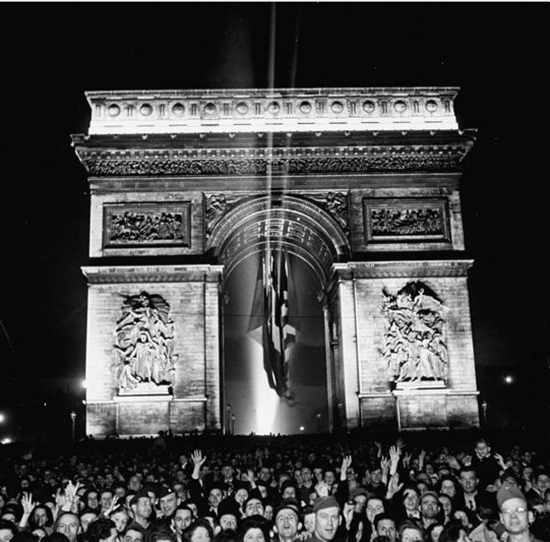
V-E Day in Paris, May 8, 1945

The official name of the La Courneuve station is La Courneuve—8 mai 1945. The date refers to V-E Day, or Victory in Europe Day: the end of the Second World War in Europe, when Germany’s act of military surrender was officially ratified in Berlin. While we don’t celebrate May 8 in the United States, it’s celebrated widely in Europe as a public holiday. Nothing really noteworthy in having a station named in honor of the end of the war, right? Towards the other end of line 7, however, two more stations drew my attention: Maison Blanche and Le Kremlin-Bicêtre. That got me thinking. “Maison Blanche” means “White House” and “Kremlin” … well, “Kremlin” means “Kremlin.” (I’ll admit, I had no idea what “Bicêtre” meant.) “How interesting!” I thought. At one end of line 7 we’ve got the end of World War II and at the other end, we’ve got the White House and the Kremlin! Hmm …

Continue reading Cold War on Line 7?

An American in the Métro

© Simon Law

There’s something quintessentially Parisian about the Paris Métro. From the art nouveau entrances to the winding corridors to the white-tiled walls and ceilings, there’s simply no confusing the Paris Métro with any other underground transit system in the world. But did you know how American a few of the Métro stations are? For most French, these stations are probably no more interesting than, say, Boucicaut or Bréguet Sabin, but for an American, they’re little souvenirs of home right here in Paris. Continue reading An American in the Métro

skwerl

As an English-speaker living in France, I know what it’s like to be in a room full of people speaking French, not understanding everything that’s being said. You hear the “sound” of the language, peppered here and there with words and phrases that are familiar; you struggle to put it all together and make sense of the situation. Here’s a brilliant take on what it must sound like for a non-English speaker to listen to us speak our language. Bravo to the writers, the director, and the actors in this excellent short film!

© 2011 Samuel Michael Bell, all rights reserved

Beautiful Ambiguity

© Paramount Television

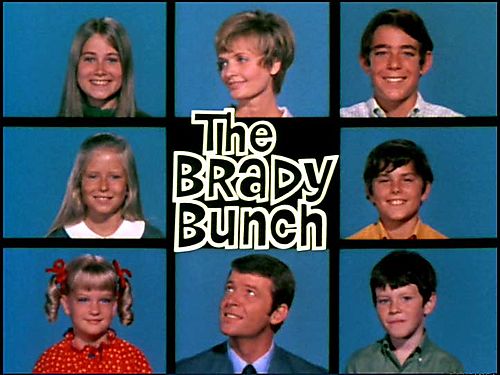
One of the most charming things about French family life is the way one expresses both the “step” and “in-law” relationships. In English, we use the prefix “step” to denote that a relationship has been created by the marriage or coupling of a new, non-biologically-related person with one’s parent. For example, your stepfather is the man who marries or co-habits with your mother after the end of her relationship with your father. Stepbrothers and stepsisters are pre-existing children that come into the family because of this new couple. Think of The Brady Bunch: Mike was Marcia, Jan, and Cindy’s stepfather; Carol was Greg, Peter, and Bobby’s stepmother; the girls were the boys’ stepsisters; and the boys were the girls’ stepbrothers. Conceivably, one could extend the prefix to other family members, as well. We use the suffix “-in-law,” however, to describe the relatives of one’s spouse. For example, your father-in-law is the father of your husband, and your sister-in-law is his sister. Again, one could use the suffix for extended family members as well.

Fairly clear and straightforward, right?

For an anglophone, though, the French way of describing these relationships can seem quite confusing. Continue reading Beautiful Ambiguity

En famille

© 2011 Samuel Michael Bell, all rights reserved

It’s been a week since my last post, and I apologize for the delay in posting something new. It’s been a very hectic and discombobu-lating 7 days.

Right after my last post, we traveled from balmy and sunny South Carolina to cold and drizzly Washington, D.C., to visit friends and ready my apartment there for a tenant. Being face-to-face with my good friends after such a long separation was like a homecoming for me. These little visits (my second one to Washington since leaving last August) remind me of how much I miss that city and the life I built there: my apartment, my church, my circle of friends … but being there this time with Michel also reminded me that my home is wherever I’m with him, whether that’s in Washington, in South Carolina, or in La Courneuve.

Continue reading En famille