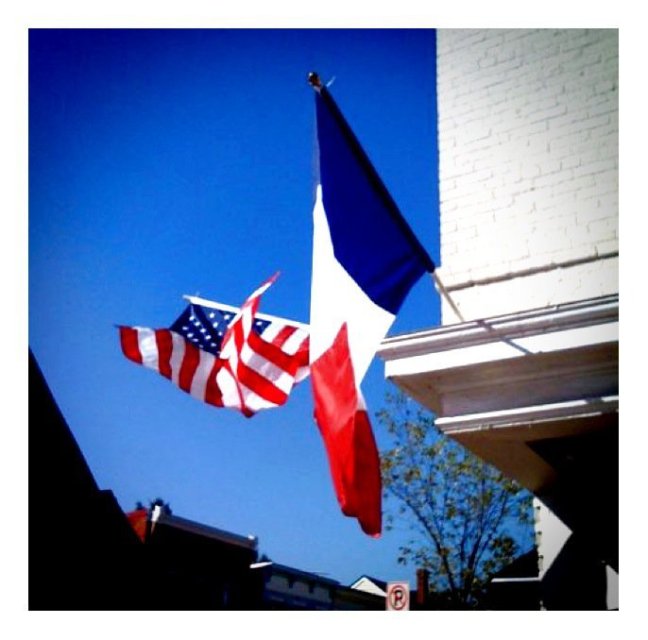
Oh Happy Day … Guacamole in Paris!

As an American living in France, I’ve come to appreciate the culinary delights of this culture (the vegetarian-friendly ones, at least):

Even so, my expatriate palate still longs for the familiar, even mundane flavors of home:

  • cheap and readily accessible peanut butter
  • Krispy Kreme donuts (because, I’m sorry y’all, but a French beignet can’t even touch a Krispy Kreme donut)
  • pimento cheese on white bread (because I’m from the South, if you didn’t pick up on that from the “y’all” I just dropped)
  • a veggie “burger” that doesn’t consist of a potato pancake stuffed with peas and carrots, and—of course—
  • Mexican fast food.

Well, I am pleased to report that I can now cross Mexican fast food off the list! Today, thanks to a fellow blogger’s post in the Americans in Paris Facebook group, I made the joyous discovery that Chipotle Mexican Grill has opened a location right here in Paris! (Click here to read her review and see pictures from Chipotle Paris.) I may not be able to find pimento cheese or good donuts here, but I can now gorge on quality, mass-produced guacamole to my heart’s content!

Vive la Révolution, indeed!

Continue reading Oh Happy Day … Guacamole in Paris!

Weekend Bourguignon

© 2012 Samuel Michael Bell, all rights reserved

Monday was Memorial Day in the United States and, thanks to the timing of Easter this year, it was also le Lundi de Pentecôte (Whit Monday) here in France. While Pentecost Monday was removed from the list of French state holidays in 2005, traditions die hard here and it made a quick comeback just a few years later. No one wants to be deprived of a three-day weekend, of course, and the French have rebelled for less. So, while my American friends were hitting the road to go to the beach or were gearing up for a weekend of barbecues and pool parties, I was doing the same.

My destination: the Burgundian countryside.

A friend of ours has a country home in Burgundy — an old farmhouse renovated into a magical little oasis far from the bustle of Paris — and we were invited along with three other friends to spend the long weekend there. How could you say no to that? So, Saturday morning, we headed off down the A6 and the A77 to western Burgundy, towards a little hamlet called Picarnon. And when I say “hamlet,” I mean it. Our friend’s country home is nestled among ten or so other houses located just off the main road, surrounded by rolling fields and woods. It was postcard picturesque and absolutely peaceful … even with the self-described “charming” neighbor, who seemed just a little too intrigued by the presence of six obviously gay guys splashing around in the inflatable pool next door. But she was nice all the same.

Continue reading Weekend Bourguignon

France’s Lost Colony: One of ‘Em, Anyway

Today marks the 450th anniversary of the day that Captain Jean Ribault sailed into the body of water that would later be known as Port Royal Sound in what is now South Carolina. The colony that he founded there became the first French settlement and—with the exception of a very short-lived Spanish outpost possibly near present-day Georgetown, South Carolina—the first European settlement in what is now the United States.

The middle of the 1500s was marked by competition among the Spanish, the Portuguese, and the French to colonize the Americas. The English, the Dutch, and even the Swedish eventually arrived on the scene, but their efforts came at least a generation later. The Spanish dominated the Caribbean, Mexico, Central America, and western South America. The Portuguese dominated eastern South America—that’s to say, Brazil. That left northern North America for the French. In the early to mid-1500s, though, a lot of it was still very much up for grabs. In fact, the French were showing up all over the place, building forts and giving places French names. For instance, there was:

  • Cap Rouge, on the St. Lawrence River. Cap Rouge was founded by explorer Jacques Cartier in 1541, but the outpost was abandoned after only one year. (The maple syrup was good, but that winter wasn’t anything to write home about, I guess.) Nevertheless, Cap Rouge went down in history as the first French settlement in the Americas. Incidentally, the city of Québec, capital of the province of Québec, was founded in 1608 on the site of the old settlement.
  • France Antarctique, near present-day Rio de Janeiro. This interestingly named colony was France’s first South American one. “Brazil?” you might ask. Yes, the French even colonized Brazil. But, really, who could blame them after having endured that chilly Canadian episode? France Antarctique was founded in 1555 as a refuge for French Protestants fleeing from the wars of religion back in France. Fort Coligny, named for the French admiral who supported the expedition (and was, himself, a Huguenot), was built on the island of Serigipe in Guanabara Bay. The village of Henriville, named for King Henri II of France, was located just onshore. Of course, the settlement was in violation of the Papal Bull of 1493, which had given the area to the Portuguese, and they eventually succeeded in destroying the French settlement in 1567.

Given that history, it should come as no surprise that the French also tried to colonize Spanish Florida, which at that time comprised all of present-day Florida and the coastal regions of present-day Georgia and the Carolinas. While the Spanish had claimed Florida as their own in 1513, they didn’t succeed in building a permanent settlement there until 1565, when they founded Saint Augustine. The French looked at that track record, of course, and thought, “Well, why not? Spanish Florida is big, and the Spanish aren’t doing anything with it!”

Continue reading France’s Lost Colony: One of ‘Em, Anyway

Quietly Gardening My Dreams

Today, in honor of my mother, who taught me the most important things about how to live my life, I share one of the most beautiful songs I’ve ever heard and one of the most touching music videos I’ve ever seen:

“Mother,” by Edward Sharpe & the Magnetic Zeros

The song is based on a poem that the group’s lead singer, Alex Ebert, wrote for his mother about a year ago. In a recent interview, he told Spinner, AOL’s music website, “I wanted to explain to her that taking her for granted for so much of my life was less a function of my admitted selfishness and more a function of her unwavering love for me. Her unflinching steadiness I took to be immovable fact — I took her for ‘granite,’ as the poem goes, to make my stand upon.”

I couldn’t find the lyrics published anywhere, so the following is my attempt at a transcription, true to the metaphors and plays on words Alex Ebert uses: Continue reading Quietly Gardening My Dreams

Neither Here nor There

Le Parti Socialiste

It’s Wednesday, May 9, less than 3 days after François Hollande became the French President-Elect in a moment that many, myself included, had dreamed would come. There are many reasons why I supported Hollande, not the least of which is his support for same-sex marriage equality. I am hopeful that under his presidency, the French government will finally recognize the fact that I am married to a French citizen and I’ll be able to apply for a visa on that basis. There are other important reasons for my support, of course; the older I’ve gotten, the more politically liberal I’ve gotten and—yes—I now consider myself a Social Democrat, firmly allied with the interests of the French Left.

If only they seemed more welcoming.

This afternoon, I came across an article in Le Monde, posted on the French newspaper’s Facebook page. I don’t always read the French press—I admit I should do it more often if, for no other reason, than to improve my French skills—but this article caught my eye:

M. Hollande reste un inconnu ‘socialiste’ pour nombre d’Américains
(“Mr. Hollande remains an unknown ‘socialist’ for a number of Americans”)

Continue reading Neither Here nor There

Remember, Remember the 8th of May

May is a month chock full of holidays here in France. Just last week, we celebrated May Day. Since it fell on a Tuesday, lots of French took Monday off as well so they could have a four-day weekend — that’s what the French call faire le pont (“to make the bridge”). This year, May is also the month that brings us such Christian holidays as Ascension on May 17 and Pentecost on May 27. While the latter is no longer a public holiday in France, the former is … but let’s not get into a discussion about laïcité, okay? Instead, I’m writing about today’s holiday:

le 8 mai

A blogger friend of mine noted in a post today that it was “Victory Day” … but no one could tell her exactly which victory it commemorated. Being the history nerd that I am, I passed along the needed information. (It also helped that my local Métro station is named for the holiday!) Given that, I figured I might as well write my own little blogpost on the holiday that I just celebrated by doing absolutely nothing special …

Victory in Europe Day” or “V-E Day” is the day that marks the end of World War II in Europe, when the Allies formally accepted Nazi Germany’s act of military surrender. Following the fall of Berlin and Hitler’s suicide on April 30, 1945, control of Germany passed into the hands of Admiral Karl Dönitz, who established a short-lived new German government named after Flensburg, the town on the Danish border where he was holed up at Germany’s naval academy. Allied forces were advancing rapidly on what remained of the German army in northwestern Germany and, on May 4, Dönitz surrendered to British Field Marshal Bernard Montgomery near Hamburg.

Continue reading Remember, Remember the 8th of May

Cinco de Mayo, or … Telling the French to Step Off

For better or for worse, Cinco de Mayo — like Saint Patrick’s Day — has become one of what NPR writer Linton Weeks calls America’s “Alcoholidays”: those holidays that have become “widely celebrated by people who have no ties to the traditions they spring from” through the festive adoption of national colors and costumes, and the excessive consumption of national alcoholic beverages.


Think about it. What would Saint Patrick’s Day in America be without the least Irish of us parading about in green while swilling Irish whiskey and chasing it with dyed beer? What would Cinco de Mayo in America be without the least Mexican of us shooting tequila while sporting a sombrero? Everyone has an opinion about whether the “mainstreaming” of such holidays is a good thing or bad thing, but I’ll leave that discussion for another day. Spending this Cinco de Mayo in France, the big question for me today (putting aside my “least Mexican”-ness) was whether I could — or should — be celebrating it here … in FRANCE.

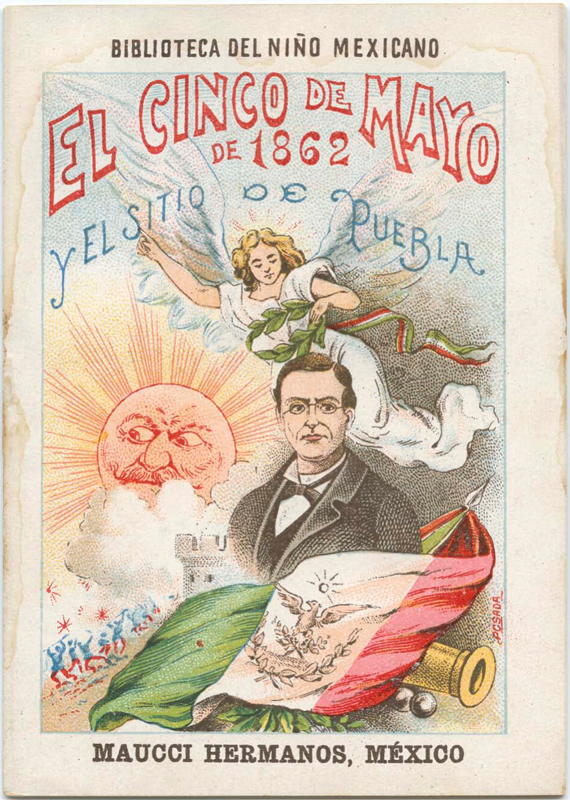
I’d wager that most Americans who are off imbibing great quantities of José Cuervo today haven’t the foggiest idea what they’re commemorating. Contrary to popular misconception, Cinco de Mayo is not Mexican Independence Day. That’s September 16, the day when Miguel Hidalgo y Costilla, a Roman Catholic priest in the town of Dolores, announced the beginning of the Mexican War of Independence in 1810 (“El Grito de Dolores” or “El Grito de la Independencia“). On the other hand, Cinco de Mayo marks the anniversary of the Battle of Puebla in 1862, when the Mexican Army defeated a superior force of French soldiers.

Wait … the French? The French were in Mexico?

Why, yes. Indeed they were …

Continue reading Cinco de Mayo, or … Telling the French to Step Off

Yes, that child is stealing from a street performer …

So, yes, it’s May Day, and I should be writing about springtime in Paris and the scent of muguet, or better yet, the perpetual struggle of the working class, but I’m not. I didn’t end up getting the material I was hoping for in order to do that, but I got something else rather amusing.

Parti Socialiste

May Day is a national holiday here in France, so I went out for a stroll around Paris this afternoon, expecting to see some May Day manifestations, the streets swollen with members of the Parti Socialiste mobilizing for Sunday’s second round presidential election. I guess I missed the big parades though because all I saw were lots of locals and tourists soaking up the sun and enjoying the musical offerings of various street performers … including one unlucky opera singer at the Louvre Pyramid.

Continue reading Yes, that child is stealing from a street performer …