
I Love Trains, Especially French Ones

© 2005 Romain Martin

Ever since I was a little boy, I’ve been a fan of trains and railroads. Maybe it was my first electric train set that did it but, like lots of little kids, I fell in love with this mode of transportation that glides along iron rails stretching off  into the horizon. Growing up in the rural South, I often watched trains passing in front of me at railroad crossings, but it would take a long time before I’d ever ride on one. In fact, I’d been flying for years before I ever took my first train ride. It was in Germany in 1992, and I still remember the novelty of walking into a station and buying a ticket on the spot for a train to take me to another town about half an hour away. There was something very charming about that moment, and it would mark rail travel — in my mind — as something quintessentially European. Later on, working in the DC office of a New York law firm, I got a lot of experience riding the rails between Union Station and Penn Station. I had a few travel adventures on the rails between DC and South Carolina, too (when Amtrak‘s fares were low enough to warrant an 8-hour roll instead of a 50-minute flight), but it wasn’t until my return to Europe in 2009 that my love affair with trains really blossomed. Why? Because for the first time in my life, I was living in a place where I could take a train to almost anywhere — whether 500 miles away or only 5. Continue reading I Love Trains, Especially French Ones
The Bastille Might be the Symbol, but it Wasn’t the Beginning … or the End

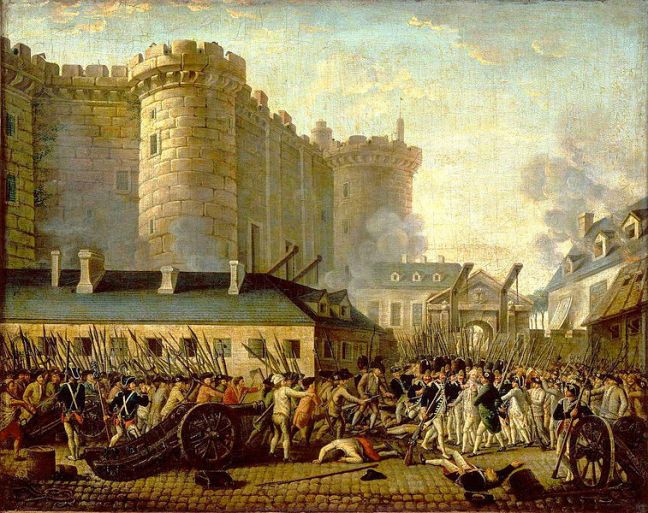
Today is July 14, the French national holiday. Here in France, it’s officially called La Fête Nationale (“The National Celebration”) or more commonly, Le Quatorze Juillet (“The Fourteenth of July”). In English-speaking countries we call it Bastille Day. We think of it as the start of the French Revolution but, as usual with the beginnings of revolutions, it wasn’t as clean-cut as that …

The Back Story

The First and Second Estates on the back of the Third

Like the American Revolution that preceded it by 14 years, there was a long fuse leading to the powder keg of the French Revolution. Every historian will tell you that the French Revolution was the product of a number of factors: malnutrition and hunger from a series of bad harvests and the resulting spike in the price of bread, the country’s financial crisis arising from France’s loss in the Seven Years’ War and its foray into the American Revolution and, crucially, the unwillingness of France’s Ancien Régime to address these problems effectively. King Louis XVI’s series of finance ministers had repeatedly attempted to address the crisis by calling for reform of France’s regressive tax structure that placed an inordinate burden on the poor to the benefit of the aristocracy and clergy. Not surprisingly, this progressive idea was adamantly opposed by the country’s parlements (regional bodies representing the aristocracy that exercised limited veto power on such matters). Continue reading The Bastille Might be the Symbol, but it Wasn’t the Beginning … or the End

As American as Apple Pie

Captain America © 2011 Samuel Michael Bell

Yesterday was my second Fourth of July here in France. Expatriates around the world know the feeling: you’re in a place that’s become your home, but on a day like the Fourth, the separation from your homeland feels wider and the differences seem more pronounced. You seek out a way to feel as “American” as you can, no matter how far from America you are. And we all have our ways of doing that …

For example →

Last year, I decided to seek out an historic American bar here in Paris and toast America’s birthday with the drink special of the day: The General Washington. Unfortunately, it didn’t go exactly as I’d planned, and it almost ruined my day. This year, Michel and I decided instead to celebrate by having a picnic on the banks of the Seine with a group of our friends. We asked everyone to bring something quintessentially American or, in the alternative, to come dressed as an “American.” Knowing this particular group of friends and their penchant for dramatic flare, I was sure to have material for my next blogpost. Continue reading As American as Apple Pie

Happy Fourth of July, everyone!

(Don’t be put off by the French. Keep reading for the English version of my little “thank you note” to France on our Independence Day.)

je parle américain's avatarje parle américain

Comme aujourd’hui nous sommes le quatre juillet, la fête de l’indépendance américaine, on devrait prendre un moment pour remercier la France pour l’aide que ce pays grand nous a offerte pendant notre révolution : On sait que vous ne l’avez fait que pour embêter les Anglais, mais merci quand même ! En toute sincérité, malgré des désaccords de temps en temps (quelques uns plus sérieux que d’autres, bien sûr), votre aide à cette époque à fait naître les liens d’amitié entre nos deux pays qui ont survécu plus de deux siècles. Qu’ils survivent à jamais !

View original post 121 more words

Labor Disputes, Wooden Shoes, and Italian Bread

Today’s “French English” word is “sabotage.” Everyone, I’m sure, knows what sabotage means: as a verb, it means to deliberately destroy, damage, or obstruct something; as a noun, it’s the act of doing that. But where does the word come from? As it turns out, “sabotage” has a direct relation to wooden shoes. “Wooden shoes?” you ask. Why, yes. Here’s how …

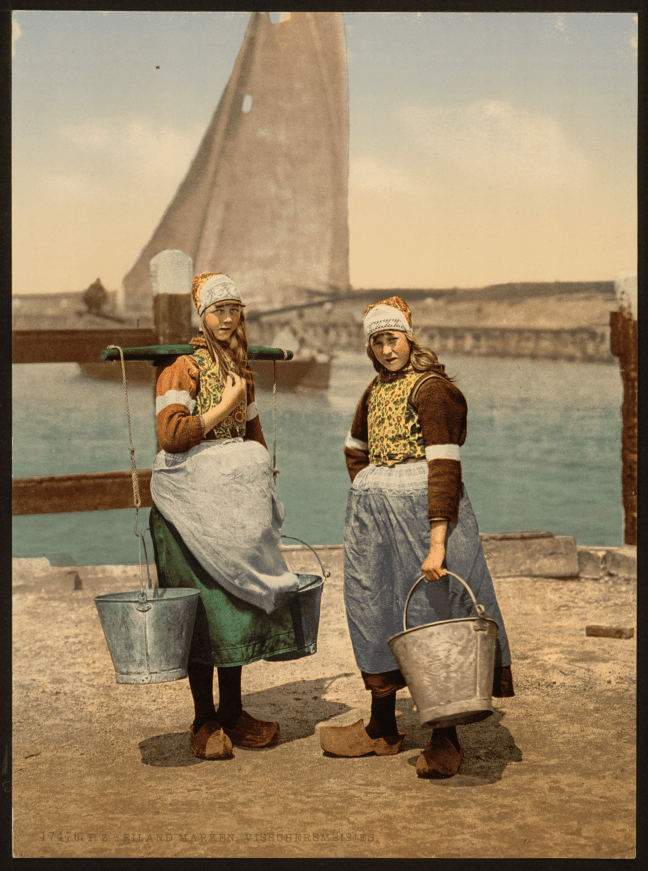
We generally associate wooden shoes with the Dutch, of course, who are often stereotypically depicted wearing them while picking tulips in front of their windmills. They weren’t the only people, however, who traditionally wore these clunky things; in fact, they were common among peasants all over Europe, including France, where they were called “sabots.” Eventually, sabot also became a slang term for the poor country folk who, during France’s Industrial Revolution, were brought into the cities to work in the factories when city dwellers went on strike. The verb “saboter” had originally been used in French to mean “to knock or tap with the foot” or “to walk noisily,” from the sound the wooden shoes would make on cobblestones, but with the arrival of these sabots in the factories, the word took on a new meaning. Because the sabot-wearing peasants weren’t familiar with the modern machinery, saboter became slang for “to bungle a job” and “sabotage” became the slang term for their poor quality work. Every strike has its end, though, and the city-dwelling workforce eventually returned to the factories. But they’d apparently learned a new bargaining tactic from the sabotsContinue reading Labor Disputes, Wooden Shoes, and Italian Bread

I Dreamed a Dream

"The Dream Lives"
“The Dream Lives”

Now that Les Caramels Fous are on vacation until the September reprise of Pas de Gondoles pour Denise, I can turn my attention to another musical, one with a slightly larger production budget: the latest adaptation of Les Misérables. There have already been at least 55 film and television adaptations of Victor Hugo’s novel of the same name, but this will be the very first film adaptation of the musical. The Christmas 2012 release will be director Tom Hooper’s first feature film since The King’s Speech, and expectations are accordingly high. His adaption of the word-renowned musical will bring to the screen such big names as Hugh Jackman (as Jean Valjean), Russell Crowe (as Inspector Javert), Anne Hathaway (as Fantine), and Helena Bonham-Carter (as Madame Thénardier), as well as such lesser known, though no less talented, stars as Amanda Seyfried (as Cosette), Eddie Redmayne (as Marius), and Samantha Barks (as Éponine). Perhaps surprisingly, even Sacha Baron Cohen (yes, that Sacha Baron Cohen … of Borat, Brüno, and Dictator fame) will make an appearance as Thénardier. Come to think of it, he might just be perfect for the role. All in all, that’s quite an impressive cast.

Les Mis was the first musical I ever saw, some 20 years ago, and watching the adaptation for the silver screen this Christmas will be the first time I will have seen it since. The musical version of Hugo’s masterpiece treats the same themes of broken dreams, unrequited love, redemption and social justice as does the novel, but the musical does it in a way that only musical theater can: Continue reading I Dreamed a Dream

Vanessa and Johnny?!

Reader Advisory:
The following is about as “People Magazine”
as you’re ever going to get from je parle américain

The Beautiful Couple

You could almost hear the gasps among certain of our friends on Facebook tonight when the news hit that French model and music star Vanessa Paradis and her partner, American film superstar Johnny Depp, were splitting up. Before tonight, I dare say that many of my friends back in the States would’ve been hard pressed to even come up with “Mrs. Depp”‘s name, but she’s a veritable institution here in France, and her Bohemian love story and family life with Johnny were almost legend.

Johnny and Vanessa’s love story started in Paris back in 1998, when Johnny noticed Vanessa across the bar of the Costes Hotel in Paris. According a People Magazine piece from 1999, Vanessa told her friend and biographer Alain Grasset that she “spotted [Johnny] pretty soon after he noticed her” and the two “were exchanging secret glances. When he invited her to his table, he made a place for her to sit down and … she went straight for it.” They spent a few hours talking, there were fireworks, and the rest is history.

Romantic huh? Maybe it reminds you of another story you’ve heard? About glances across a crowded bar and the beginning of an international love story? Yeah? No? Maybe? Okay, click here for a reminder. Michel and I used to joke about Vanessa and Johnny being our “celebrity couple analogs” … or, as I like to describe it, “Sultry French singer meets devastatingly handsome American.” Okay, so maybe the analogy isn’t spot on, but it’s good for a chuckle over drinks with friends … or for the hook of a blog post. Ahem. So, getting back to the story at hand …

Continue reading Vanessa and Johnny?!

What a Year It’s Been!

Happy Birthday to je parle américain!

It’s hard to believe that je parle américain is celebrating its first birthday today. It seems like just yesterday (to me, at least) that I posted the headline that read “Big change of focus underway … if Julie Powell can do it, so can I.” Two days later, I published my first ever blogpost: “So what’s this all about?” where I announced that what had been the website for my stalled “English language consultancy” would henceforth be the online diary of this American in Paris, where I would recount for your entertainment my experiences as an expatriate in the City of Light.

The French Bureaucratic Migraine

Well, since then, I’ve recounted a lot for you. I’ve complained quite a bit, of course; I’m pretty good at that. Surprisingly, it doesn’t seem to have bothered you much (with one or two notable exceptions). In fact, it seems that I get my biggest spikes in readership when I complain about, oh, I don’t know … the perpetual headache of French bureaucracy … or getting mistreated by Parisian waitstaff on the Fourth of July … or how filthy my neighborhood is. I want you to know, dear readers, that I sincerely appreciate your support and commiseration. When the burden of expatriate life gets you down, there’s nothing like a pat on the back from compatriots back across the ocean to make you feel better, or from fellow expats here in France to make you feel less alone.

Continue reading What a Year It’s Been!

Make Yourself Comfortable

One of the “French English” words that I love most is “comfortable” because … well, like most people, I like being comfortable in a comfortable place. That’s one of the great things about the word — it can describe both someone who’s in a state of physical or mental comfort and the thing or condition that makes them that way. “I’m so comfortable when I’m lying in my comfortable bed!” Like that. Little did I know when I came to France, though, the French equivalent “confortable” doesn’t work quite the same way …

As much as I like being comfortable, I like to know that the people around me are comfortable, too. I’m almost nebby about it … “Is everything alright? Are you okay? Can I get you something? Are you comfortable?” Whether it was on the sofa while watching a movie, in a train on our vacation, or during a quick aside when meeting my family or friends, I was constantly asking my husband Michel if he was comfortable …

Ça va? Tu es confortable?

On the outside, Michel was telling me that everything was fine but, on the inside, he was apparently laughing at me. Continue reading Make Yourself Comfortable

No Gondolas for Denise

© 2010 Les Caramels Fous, used courtesy of the company

Most of you know that I’m married to an amateur singer and dancer. Michel has been a member of a musical theater troupe here in Paris called Les Caramels Fous (“The Crazy Caramels”) for about four years. While they may not be a professional company, let me assure you that the musicals performed by this thirty-year-old all-male, all-gay troupe are anything but amateur. When I first met Michel in April 2009, he was getting ready for the premiere of the Caramels’ musical Madame Mouchabeurre (“Mrs. Butter-Fly”), a comic retelling of the opera Madama Butterfly set in Brittany in the 1950s and 1970s. Michel played several roles, including a Breton woman wearing an outfit from the ’50s, a Breton man in traditional costume, a French sailor, and an American paratrooper. Madame Mouchabeurre had three highly successful runs here in Paris in June 2009, October/November 2009, and June/July 2010, the Caramels playing three performances a week to packed houses for three- or four-week stints each time. Starting in November 2010, the Caramels took Madame Mouchabeurre on the road for several more performances all around France: Charleville-Mézières (Ardennes), Nantes, Fréjus, Merignac (Bordeaux), Blagnac (Toulouse), La Baule, and Nice, before returning to Paris for another performance at Puteaux last December. Continue reading No Gondolas for Denise