There’s something quintessentially Parisian about the Paris Métro. From the art nouveau entrances to the winding corridors to the white-tiled walls and ceilings, there’s simply no confusing the Paris Métro with any other underground transit system in the world. But did you know how American a few of the Métro stations are? For most French, these stations are probably no more interesting than, say, Boucicaut or Bréguet Sabin, but for an American, they’re little souvenirs of home right here in Paris. Continue reading An American in the Métro
As an English-speaker living in France, I know what it’s like to be in a room full of people speaking French, not understanding everything that’s being said. You hear the “sound” of the language, peppered here and there with words and phrases that are familiar; you struggle to put it all together and make sense of the situation. Here’s a brilliant take on what it must sound like for a non-English speaker to listen to us speak our language. Bravo to the writers, the director, and the actors in this excellent short film!
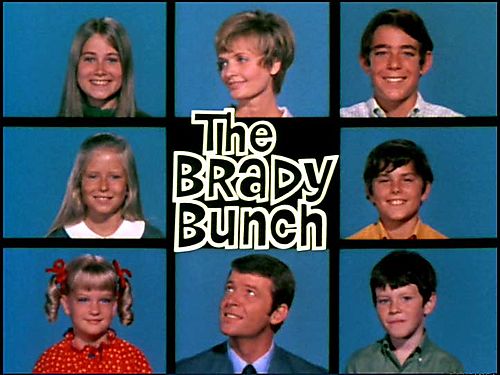
One of the most charming things about French family life is the way one expresses both the “step” and “in-law” relationships. In English, we use the prefix “step” to denote that a relationship has been created by the marriage or coupling of a new, non-biologically-related person with one’s parent. For example, your stepfather is the man who marries or co-habits with your mother after the end of her relationship with your father. Stepbrothers and stepsisters are pre-existing children that come into the family because of this new couple. Think of The Brady Bunch: Mike was Marcia, Jan, and Cindy’s stepfather; Carol was Greg, Peter, and Bobby’s stepmother; the girls were the boys’ stepsisters; and the boys were the girls’ stepbrothers. Conceivably, one could extend the prefix to other family members, as well. We use the suffix “-in-law,” however, to describe the relatives of one’s spouse. For example, your father-in-law is the father of your husband, and your sister-in-law is his sister. Again, one could use the suffix for extended family members as well.
It’s been a week since my last post, and I apologize for the delay in posting something new. It’s been a very hectic and discombobu-lating 7 days.
Right after my last post, we traveled from balmy and sunny South Carolina to cold and drizzly Washington, D.C., to visit friends and ready my apartment there for a tenant. Being face-to-face with my good friends after such a long separation was like a homecoming for me. These little visits (my second one to Washington since leaving last August) remind me of how much I miss that city and the life I built there: my apartment, my church, my circle of friends … but being there this time with Michel also reminded me that my home is wherever I’m with him, whether that’s in Washington, in South Carolina, or in La Courneuve.
Today was September 29: Michaelmas, or the Feast of Saint Michael. In America, we don’t generally make a big deal about the feast days of saints. There are exceptions, of course, the most well-known in America being Saint Patrick’s Day, when we wear green and get drunk, all while pretending to be Irish … and perhaps the Feast of Saint Francis, when you might take your pooch to church for a blessing even if you haven’t darkened the church door for a few months. It was not until I met my French husband, though, that I realized how feast days are still very current in the French consciousness, even if they have largely—if not entirely—lost their religious connotation. As soon I had a few French friends on Facebook, I started to see “bonne fête” popping up in my newsfeed—not thanking someone for a great party the night before, but sending good wishes on the feast day of the Saint that bears his or her name. It’s a nice tradition, and one that I’ve adopted with my French family and friends.
It was the first time that my husband and I had traveled across the Atlantic together: US Airways 787 from Paris-Charles de Gaulle to Charlotte Douglas International on Saturday. Michel has visited me in the United States before, of course: the first time was in December 2009 to meet my friends and family, and the second time was in July 2010, when we got married before my departure for France. But Saturday was a particularly interesting travel day: Jean Reno and a jackass immigrant officer at CDG, an obnoxious flight attendant with an apple and a pear, and a surprisingly warm welcome at immigration control in Charlotte. Continue reading Jean Reno, apples & pears, and my French husband
Okay, I admit it. I’m rapidly becoming a grumpy old man and there’s no use denying it. Michel has even called me “grumshy” — a word he apparently coined as a hybrid of “grouchy” and “grumpy” while searching for one of those two words but failing to find either one. And he’s right. I’ve found that the older I get and the longer I stay in France (two things that are coincidental at the moment), the less I can stand sustained buzzing, screeching, whining, high-pitched noises.
Three months ago, I launched je parle américain in its current form: an online diary of my life as an American expatriate in France. Since then, I’ve published 47 posts, of which 27 are what I’d call substantial pieces. (The rest were short observations or posts sharing videos or photos.) I’ve written about everything from my immigration woes to how to make good pancakes at home, from how I met the love of my life to the history of “not” in French. To mark the “quarter-birthday” of je parle américain, here are a few interesting observations gleaned from the blog’s stash of stats, as well as links to my top ten posts by traffic and by commentary. Oh, and don’t stop reading before the end, because I’ve included a catalog of the top ten strangest search strings that have brought Internet surfers to my blog. Continue reading 3 months and 3,000 views
“The clearest way into the universe is through a forest wilderness.” — John Muir
Last week, I went with Michel, my mother-in-law, and my father-in-law for a walk in the woods—not in La Courneuve, certainly, and not even in the woods close to Paris (the Bois de Boulogne or the Bois de Vincennes), but in Picardy, about an hour to the north. There’s a trail in the Forest of Compiègne near the village of Saint-Jean-aux-Bois that we know and love. It leads you into a world that’s far away, one that’s quiet, peaceful, and full of simple wonders.
Registering for my fall classes this morning got me thinking about what it is that I really love about learning a foreign language. It’s certainly not conjugating the pluperfect of the subjunctive mood! Instead, it’s linguistics and etymology: how we say the things we say, and why it is we say them that way. Today’s musing:
pas
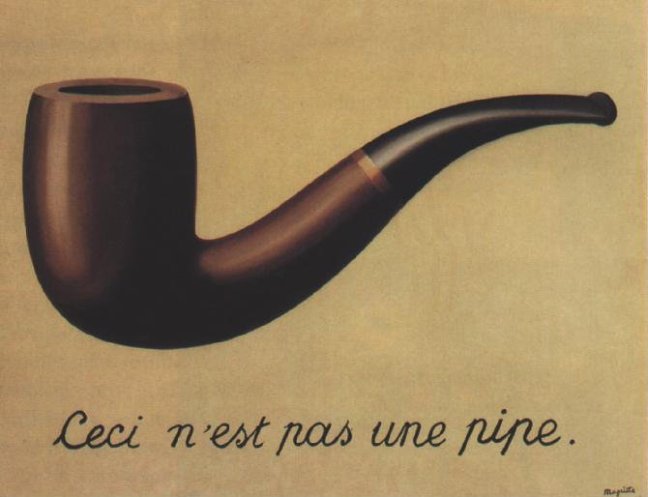
For anyone with even a basic knowledge of French, “pas” is a pretty easy word. It means “not” … right? Well, I’ll get back to that in a minute but, more importantly for now, “pas” also means “step” — as in the motion we make when we place one foot in front of the other. Hence, we have the expression “faux pas” — one that we’ve adopted directly into English — meaning a mistake or, more precisely, a “false step.” So, how exactly did a word that means “step” also come to be the most common word in French to mean “not”?












 je parle américain