Mike Bell: Cowboy, Alligator Wrestler

Being an American in France has given me, rightly or wrongly, a certain mystique thanks to the preconceptions of my French family and friends. Some of their preconceptions, of course, are not ones I readily embrace, however true they might be. Others, I tend to play up, however true they might not be. One of those embraceable preconceptions is that I’m some sort of cowboy.

Part of the attraction of “America” for some French people, I think, is the image of the cowboy as an American stereotype. Now, I’m certainly no Marlboro Man and I’d say I’m prone to being booted out of most roadhouses, but I have been on a horse, I have country line danced, and I do walk with a certain thumb-in-pocket swagger, even on the cobblestones of Paris. Growing up in the Deep South — in the country — and speaking with a certain drawl about subjects like hunting, tractors, and country-western music give me a certain “cowboy credibility” here … even though I’m a vegetarian, I’ve only shot my father’s rifle a handful of times, and the most farm work I’ve ever done was picking beans in my parents’ garden. Nevertheless, if they want to see me as a cowboy, I’m more than happy to oblige.

Last week, when I was in South Carolina, my parents and I traveled down to Hilton Head to visit my aunt and uncle. Now, we all know that Hilton Head is not exactly the Okefenokee, but I knew there’d be alligators there and I was anxious to snap a few good shots to impress Michel, who was back in France. The evening after we arrived, my uncle and I went out searching for alligators in the neighborhood and just when we thought there were none to be found, we happened upon a big daddy gator sunning himself on the bank of a pond. Like an American Crocodile Dundee, I sprang into action … Continue reading Mike Bell: Cowboy, Alligator Wrestler

Our Daily Bread

April 2009. The beginning of a great love affair. © 2012 Samuel Michael Bell, all rights reserved

One of my favorite things about living in France is the bread. The French, as you know, have a knack for making great things in the kitchen, and their bread is undoubtedly one of their finest products. I often joke that the reason I’ve gained about 7 kilos (that would be 15 pounds) since the summer of 2009 is the fact that French bread is so readily available. In Paris, you can’t walk for more than 2 or 3 blocks without the scent of freshly baked baguettes enticing you into a boulangerie like some siren song for your waistline.

This is also why I’ve often said that I can’t really eat American bread anymore. My palate has become so snobbish about bread that I even turn my nose up at the creations of the very artisanal American bakeries that I formerly patronized and touted to the world, and I even claim that Le Pain Quotidien just tastes different in America than it does in France. I’ll never forget Michel‘s first visit to Washington back in December 2009, when I went searching for a baguette for dinner, hurrying home with a pain de campagne from my neighborhood bakery because they didn’t have any baguettes, only to blush with embarrassment upon realizing that it simply didn’t measure up to what Michel was used to eating—what I’m now used to eating. That’s why I chose a warm, fresh tradition for my last lunch in France before leaving for the U.S. last weekend. I had to get my fix before starting this two-week sojourn in the land of Merita and Sunbeam, you know. Continue reading Our Daily Bread

The Light at the End of the Tunnel

© Sura Nualpradid

Hey … remember me?

Yeah, it has been a while. I know that I told you I’d try to post something every now and then while slogging through my CELTA training course, but it really hasn’t been an option, guys. I promise.

Here’s a picture of what my average day has been like for the last three weeks:

I wake up around 5 a.m., practicing the day’s lesson plan in my head and obsessing over the gaps that I couldn’t recall during my anxiety-ridden dreams, I try to go back to sleep, and I succeed in dozing until around 7:15 a.m. (or 6:45 a.m. on days when I have teaching practice). Then it’s up and at ’em … I arrive at school some time between 8:15 a.m. and 8:45 a.m., where I print out lesson plans, exercises and materials, or written assignments.

Our instructional sessions start at 9:15 a.m. That’s where we learn about every conceivable facet of teaching methodology (and a bit of English grammar to boot). Then it’s “teaching practice consolidation” from about 12:30 p.m. until about 1:00 p.m., when we review our lesson plans with the other trainees who will be teaching during the same 2-hour class in the afternoon. (Since we have 40-minute lessons each on the days when we teach, there are always two other trainees with whom we have to coordinate our lessons to ensure that the afternoon is a cohesive and productive experience for the students.) Then comes lunch, but I don’t really eat much, because I’m usually spending that hour or so revising my lesson plan, making last-minute changes to the materials, and nervously anticipating my lesson. Then it’s show time—a two-hour lesson for a class of anywhere from four to ten EFL students!

Continue reading The Light at the End of the Tunnel

Can I sleep now?

Well, everyone, today marks the end of my first week of intensive training to become a teacher of English to speakers of other languages. That’s 5 days down and 21 to go. I don’t have much time to indulge in the leisurely activity of blogging at the moment, so I’ll just share an edited Facebook status I posted this evening when I first got home. I think it sums up the first week pretty nicely.

  • I’m exhausted! In the last two nights, I’ve slept a total of 9 hours. I don’t expect this to get much better any time soon, either. Methodology and language analysis sessions every morning + teaching practice or observation every afternoon + 4 or 5 hours of lesson planning or homework every night = a hard row to hoe.
  • Writing lesson plans is truly an art … and a time-consuming one at that. Thank all the good teachers in your life for putting the effort into making good plans for what they taught you. Most of us have no idea how much thought and work go into that. That’s probably because the best teachers just make it look so easy.
  • My first lesson to a group of real, live students was on Tuesday afternoon. It went really well even though I was nervous enough to feel like throwing up for two hours before it even started. My second lesson on Thursday was personally disappointing. I felt extremely stressed because of last-minute changes to the lesson plan. According to my evaluator, though, it went well. Today’s lesson, on the other hand, was nothing short of a disaster. I tried to accomplish too much, and my instructions weren’t clear enough or adequately reinforced. My evaluator didn’t argue with my self-assessment, but at least I didn’t get raked over the coals. Instead, she pointed out my strengths and was glad to see that I immediately recognized the areas where I overstretched. Maybe it’s a training rule not to crush your spirit at the outset? (By the way, “freer stage” lessons—for anyone who’s familiar with the concept—are not as easy as they seem.) Continue reading Can I sleep now?

Truffles: mushrooms, chocolate, and … dogs?

For the last post before my CELTA English teaching course begins Monday, I thought I’d write about a few relevant “French English” words : student, study, review, professor. Then a friend shared an interesting article with me, and I decided to go with truffle instead—probably more engaging and certainly more enticing than a discussion about homework!

Truffle has two very distinct meanings in English, of course. It can refer to the very tasty and very expensive mushroom that grows in forests between the leaf litter and the soil and gets sniffed out by special truffle-hunting pigs and dogs. If you have a sweet tooth like me, though, the word probably initially conjures up images of those decadent little chocolate confections.

The word truffle (or “truffe” in Modern French) comes from the Old French “trufe” by way of the Old Provençal “trufa,” which itself comes from the Vulgar Latin “tufera“—a dialectal variant of the Latin “tuber,” meaning “lump.”

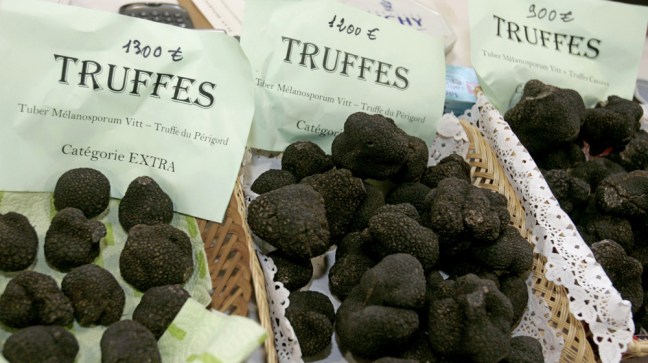
black Périgord truffles © 2012 Reuters
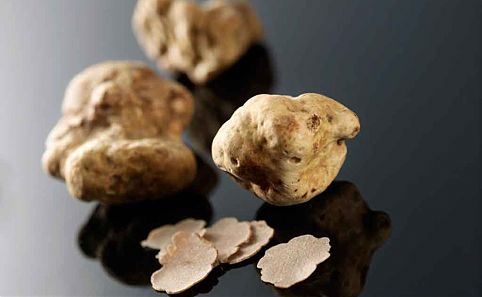
Italian white truffles

When you look at a truffle of the fungal variety, you can certainly see why it takes its name from the Latin word for lump. It’s definitely not a pretty thing, but the taste … well, it’s simply amazing. There is a reason, after all, why the black Périgord sells for as much as $800 a pound and the white variety sells for as much as $2,000 a pound! Continue reading Truffles: mushrooms, chocolate, and … dogs?

Laissez les bons temps rouler!

About a week ago, I stumbled upon Tremé, an HBO series set in New Orleans after Hurricane Katrina. It’s the story of several New Orleanians struggling to rebuild their lives after the catastrophe. On a grander scale, it paints a poignant picture of a unique culture determined to preserve itself against the odds. In a few days’ time, I had already watched the entire first season; I hadn’t felt such an immediate attraction to a television series in a very long time, and I simply couldn’t stop watching it. The music and the scenery brought back memories of my first and only visit to New Orleans a few years after the hurricane, and I decided that I needed to see it again one day and show its magic to Michel.

© Home Box Office, Inc.

And, of course, all this happened in the days leading right up to Mardi Gras.

Mardi Gras, meaning “Fat Tuesday,” is a Christian holiday marking the end of the season of Epiphany and the beginning of the season of self-sacrifice called Lent (or Carême, in French). It’s the culmination of Carnival season, when you’re expected to indulge (notably in fatty foods—hence the name) in advance of the solemn season that follows. If you’ve ever been to New Orleans—whether at Carnival season or even in November—you know that no one does decadence quite like the Crescent City : think shrimp po’ boys and spicy gumbo, warm beignets dusted with powdered sugar at Café du Monde, and Hurricanes in go-cups.

But why does New Orleans indulge so well? Perhaps it’s because the city can trace its very origins—however tenuously—back to Mardi Gras :

Continue reading Laissez les bons temps rouler!

A Love Lock?

As a hopeless romantic, I just love anniversaries, and Michel and I celebrate a lot of them: the day we met … our first real date … our engagement … our marriage … the first time we ate ice cream together (okay, maybe that one is an exaggeration—but just barely). We don’t stop with anniversaries, though; we even celebrate the “monthaversaries,” as in “Today is 17 months since … blah, blah, blah.” Some of my friends used to joke about my monthly spate of Facebook dedications, but they’ve grown awfully quiet these days. They must have all just suppressed me from their newsfeed. After almost three years together, I guess marking monthaversies had become old-hat.  So, a few weeks ago, I asked myself: “Why not celebrate a different date—some unusual milestone?” Well, geeky hopeless romantic that I am, I did the math and determined that today—February 12—marks one thousand days since we said those magic words to each other for the very first time:

I love you.

Je t’aime, aussi.

Pretty good idea, huh? But how to celebrate? Well, living in Paris definitely puts the pressure on you to come up with something extraordinary. Paris doesn’t have a monopoly on romance, of course, but there is something magical about this city that can turn the most ordinary of moments into a scene from a sappy romantic comedy:


(Don’t skip the video! It’s really cute.)

So what did I come up with? A crêpe sucrée? A crème brûlée? Beret shopping? Well, no. I didn’t want my little Phineas to miss his cue, so I decided to get a cadenas d’amour

a “love lock.” Continue reading A Love Lock?

I’ll have a Martini, s’il vous plaît.

This isn’t a blog post about the arguments over what constitutes a martini: gin versus vodka, shaken versus stirred … if something with Pucker in it can even lay claim to the name. Instead, this post is about a crucial difference between martinis in America and martinis in France. If you’re ever thinking about ordering one in this country, pay close attention. This is very important!

To illustrate this lesson, I’ll share an anecdote recounted by a friend over dinner Friday night:

A group of Americans walk into a restaurant in Paris and are seated for dinner. (I know this sounds like the start of a joke, but it’s not.) The waiter arrives and asks if anyone would like to start with a cocktail or an apéritif. One of the Americans orders a martini.

“Blanc ou rouge?” the waiter asks.

“Uh … rouge,” the American responds tentatively. “There must be a splash of cranberry or Chambord in there,” she thinks to herself, remembering that “rouge” means “red” in French.

“And for Monsieur?”

“I’ll have a blanc,” Monsieur replies. “That must be a ‘normal’ martini,” he thinks to himself, before starting to wonder why the waiter didn’t ask if they preferred gin or vodka.

Continue reading I’ll have a Martini, s’il vous plaît.

Groundhogs? Pancakes!

Presentation of Christ at the Temple, Hans Holbein the Elder

February 2 might be Groundhog Day in the United States, but it’s also Candlemas on the Christian calendar. It’s the day when the Church celebrates Joseph and Mary’s presentation of the baby Jesus at the Temple in Jerusalem forty days after his birth, in keeping with the Jewish tradition of ritual purification and redemption of the firstborn. Despite the Catholic church’s official rejection of such theories, some believe that Candlemas was created to Christianize a pre-existing Roman holiday, Lupercalia, or perhaps a pre-existing Celtic holiday, Imbolc. Lupercalia was the feast of Lupercus, the god of fertility and herds. Imbolc was the feast of the goddess Brigit, and was marked by torchlit processions through the fields to invite purification and fertility for the coming spring. Whether he was motivated to co-opt these pagan holidays or not, it was Pope Gelasius I who instituted Candlemas in AD 492 and fixed its date on February 2. The blessing of candles and candlelit processions supplanted earlier pagan rites and gave rise to the name of the holiday.

These days in France, though, Candlemas (or Chandeleur, from chandelle, meaning “candle”) is known less for its candles and more for its …

CRÊPES

Continue reading Groundhogs? Pancakes!

Oh là là! Where’s my baguette?

Yes, I’ve spent three semesters learning French in a rigorous academic setting here in Paris, but there are still those moments when I just have to fake it … like hanging out last night in a bar with French college students, or sitting around the dinner table with my French family, or taking an oral exam. Truth be told, I understand what they’re saying to me SO much less than they think I do, but I put on a good act!

So, go pour a glass of red, grab that baguette, sit back, and enjoy this little gem a friend found on the Internet:

And don’t worry if you can’t quite make out what she’s saying about Americans in Step Four. You don’t really have to understand it—just shake your head and cuss a little!

© 2012 Samuel Michael Bell, all rights reserved (not the video, of course … if only I were so talented)