Act One, Scene 4

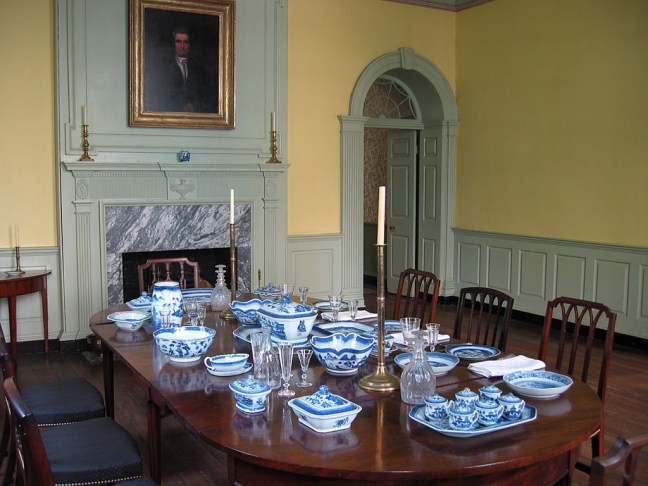
Dining room of The John Marshall House in Richmond, Virginia,
built in 1790 by John Marshall, later Chief Justice of the U.S. Supreme Court

This is the fourth scene of my play, A Sword Unsheathed, originally written in French and translated into English for publication on the blog. If you haven’t yet read the first scene, you can find it here. You can find all the scenes published so far on this page. The original French version of this scene is found at the end of the post. (Read in French.) Please read the historical note here.

Voici la quatrième scène de ma pièce, Un sabre dégainé, écrite à l’origine en français et traduite en anglais pour publication sur ce blog. Si vous n’avez pas encore lu la première scène, vous pouvez la trouver ici. Vous pouvez trouver toutes les scènes déjà publiées sur cette page. La version originale en français de cette scène se trouve à la fin de l’article. (Lire en français.) Veuillez lire ici la note historique.

SCENE 4
(Read the previous scene.)

The Characters

BENJAMIN HUGER, plantation owner, about 35 years old
FRANCIS HUGER, his son, about 7 years old
ALICE, Francis’s cousin, about 16 years old
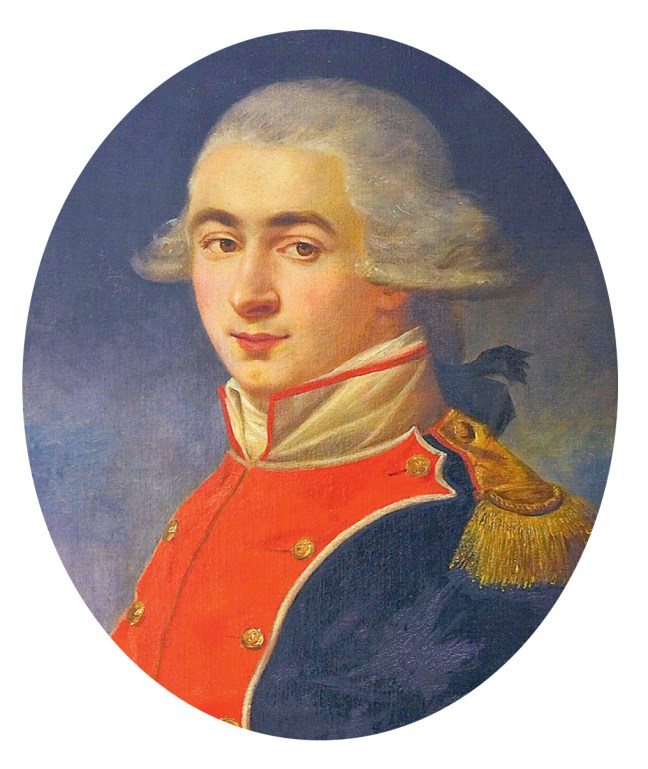
GILBERT DU MOTIER, the Marquis de Lafayette, about 19 years old

The dining room of the house. The same evening. Everyone is seated around a large table, dining, Gilbert in the center, Benjamin to the left, Alice to the right, Francis between Gilbert and Alice. Dishes are spread all along the table. A candelabra. Wine. Continue reading Act One, Scene 4

A Day to Remember

The article I published last year to commemorate D-Day:

“Today, let us take a moment to remember the ultimate sacrifice made by so many on the beaches and in the hedgerows of Normandy that rainy June [69] years ago, so that the liberation of France might finally begin.”

je parle américain's avatarje parle américain

The United States and France have a long relationship, and like all relationships, ours has had its ups and downs. Born during our Revolution, Franco-American friendship is, of course, the complex product of our two countries’ unique histories and the moments when our paths have crossed — moments when we have shared the same struggle and the same vision of the way the world should be.

Perhaps no moment in our shared history demonstrates the strength of our friendship and common cause more so than D-Day, June 6, 1944 — when 73,000 Americans, 61,715 British, and 21,400 Canadians landed on the coast of Normandy to begin the liberation of France from Nazi occupation. That operation, codenamed “Neptune,” was the largest amphibious assault in history, and formed the spearhead of “Operation Overlord,” the military operation to liberate northern France. The D-Day operation has been memorialized in our history books, in…

View original post 657 more words

Meerkat to Marilyn: Street Art, Vol. 3

It’s been quite some time since I last posted some Paris street art for you. The last collection was pretty somber, too: shades of gray and dingy earth tones were predominant. It was appropriate, though, for the dreary Parisian winter we just endured. Now that spring has finally made her long-awaited appearance (just in time for the summer solstice), it’s high time that I publish this slightly more colorful collection. I do hope you enjoy it — and keep an eye out for the next installment. There’s always more to be seen … Continue reading Meerkat to Marilyn: Street Art, Vol. 3

We Are the World

Lire en français.

Yesterday morning, I woke up early, got myself ready, and went off to my last French class ever. It was the culmination of five semesters of studying French — as Moses once put it — as “a stranger in a strange land.” It’s been a long road, sometimes frustrating, sometimes nerve-wracking, but always fulfilling. I’ve learned a lot these last few years. I often joke that even after four years of French in high school, I could barely string together enough French to order dinner when I first met Michel. Now, I’m now somewhere between a C1 and C2 level of competence, depending on which skills you’re measuring. Grammar is definitely my strong point: on the TCF I took in February, I got a perfect score! I may not be able to speak French that well off the cuff, and I might still have a very noticeable (but hopefully still charming) American accent, but if you put a French sentence in front of me, I can diagram that thing like a pro! That’s probably a good thing, because my next academic endeavor looks like a foray into the world of linguistics at Université Paris Descartes (Paris V).

But I’ve gained a lot more than a second language. Continue reading We Are the World

Act One, Scene 3

This is the third scene of my play, A Sword Unsheathed, originally written in French and translated into English for publication on the blog. If you haven’t yet read the first scene, you can find it here. You can find Act One, Scene 2 here. The original French version of this scene is found at the end of the post. (Read in French.) Please read the historical note here.

Voici la troisième scène de ma pièce, Un sabre dégainé, écrite à l’origine en français et traduite en anglais pour publication sur ce blog. Si vous n’avez pas encore lu la première scène, vous pouvez la trouver ici. Vous pouvez trouver Premier Acte, Scène 2 ici. La version originale en français de cette scène se trouve à la fin de l’article. (Lire en français.) Veuillez lire ici la note historique.

SCENE 3
(Read the previous scene.)

The Characters

BENJAMIN HUGER, plantation owner, about 35 years old
FRANCIS HUGER, his son, about 7 years old
ROBERT, a slave
GILBERT DU MOTIER, the Marquis de Lafayette, about 19 years old

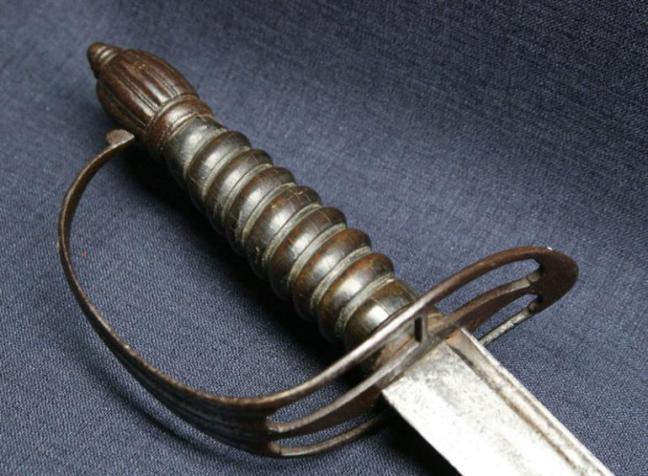
Return to the year 1777. The entry hall of the house, same set as the previous scene. The sword in its scabbard, still attached to the blue silk sash, is lying on the desk. Benjamin enters stage right (from the terrace in scene 1) with Francis and Robert. Robert is helping Benjamin into his coat.

Continue reading Act One, Scene 3

French Kiss: Don’t Forget Your Galoshes

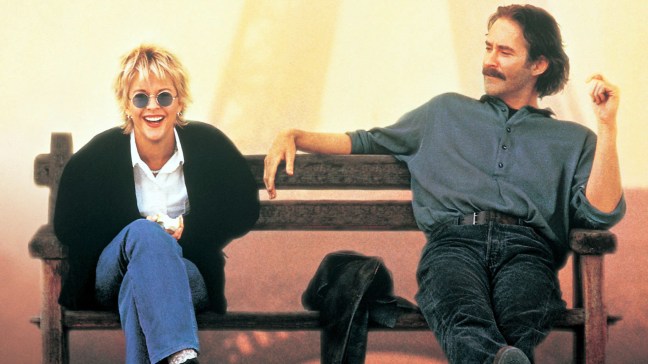
From the 1995 Lawrence Kasdan romantic comedy French Kiss
starring Meg Ryan and Kevin Kline

This might come as a surprise to you but, before today, the French didn’t even have an officially-sanctioned word for one of their most famous romantic exports:

French Kissing

That’s right. The very practice that returning World War I soldiers nicknamed after the French has only just now gotten its own entry in the French dictionary. This racy new vocabulary word?

galocher

Continue reading French Kiss: Don’t Forget Your Galoshes

The “All Good” Law

Languages are always evolving, and the speed at which they’re doing it has only increased in recent years. Broader international travel, continued waves of migration, and the dawn of the Information Age have made cultural exchange, including the importation of words from other languages, quicker and easier than ever before. There’s a clear trade imbalance, though, and it’s English that’s the chief exporter these days. And the French are very sensitive to that. Continue reading The “All Good” Law

Act One, Scene 2

Photo used with the permission of Dimitry Gelfand.

This is the second scene of my play, A Sword Unsheathed, originally written in French and translated into English for publication on the blog. If you haven’t yet read the first scene, you can find it here. The original French version of this scene is found at the end of the post. (Read in French.) Please read the historical note here.

Voici la deuxième scène de ma pièce, Un sabre dégainé, écrite à l’origine en français et traduite en anglais pour publication sur ce blog. Si vous n’avez pas encore lu la première scène, vous pouvez la trouver ici. La version originale en français de cette scène se trouve à la fin de l’article. (Lire en français.) Veuillez lire ici la note historique.

SCENE 2
(Read the previous scene.)

The Characters

BENJAMIN HUGER, plantation owner, about 34 years old
FRANCIS HUGER, his son, about 6 years old
NATHANIEL HUGER, his eldest son, about 16 years old
ALICE, Francis and Nathaniel’s cousin, about 15 years old

One year earlier: 1776. The entry hall of the house: the main doors are center stage, with windows on either side. A desk and chair are stage right, a staircase stage left. Benjamin and Nathaniel are standing center stage. Continue reading Act One, Scene 2

Le petit chapeau

Disclaimer: I’m not a linguist (yet) so, if you are one, please be gentle in your reactions if I’ve gotten something completely wrong …

As English speakers, one of the first things we notice about French is the widespread use of diacritical marks — or “accents” to be less linguistic about it. For students of the language (native speakers and non-native speakers alike) they can sometimes be the bane our existence. Accents obviously aren’t necessary — we don’t really use them in English, after all* — but they serve important functions in the languages that do use them. Sometimes, they denote a change in the pronunciation of the underlying letter. In French, for example, ça and ca don’t sound the same. Sometimes, though, accents don’t change the pronunciation at all; instead, they serve an orthographic (spelling) function to distinguish homophones. For example, la and là sound exactly the same in French but have entirely different meanings. Even though modern French is full of accents (the accent aigu, the accent grave, the tréma, etc.), they were introduced relatively late to the language. In fact, you’d be hard pressed to find many diacritical marks in a text from the Middle Ages. So what explains their introduction? Well, a comprehensive account of the evolution of French accents is thankfully far too complex to go into here, but I do want to talk about one in particular that has an interesting story and implications for English-speaking students of French:

le petit chapeau … the little hat … the circumflex Continue reading Le petit chapeau

Goin’ to the chapel … the city hall … a meadow?

It’s been a big weekend for civil rights here in France. If you’ve followed our news lately, you’re certainly familiar with the movement known as “Mariage pour tous” (“Marriage for All”). It’s the popular name for a legislative initiative to open marriage to same-sex couples and extend adoption rights to us. After months of vigorous debate and sometimes violent opposition, it was adopted this spring by the National Assembly and the Senate. Opponents immediately challenged the law’s constitutionality before the French Constitutional Council — the equivalent of the Supreme Court in the United States — and we waited for the ruling with a mix of hope and anxiety. Continue reading Goin’ to the chapel … the city hall … a meadow?