Act One, Scene 2

Photo used with the permission of Dimitry Gelfand.

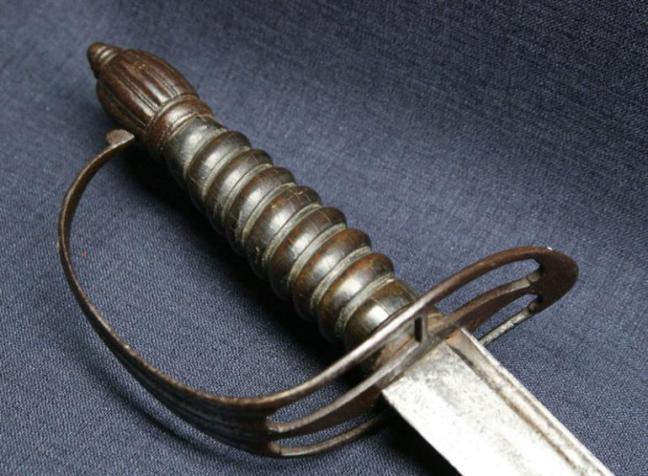
This is the second scene of my play, A Sword Unsheathed, originally written in French and translated into English for publication on the blog. If you haven’t yet read the first scene, you can find it here. The original French version of this scene is found at the end of the post. (Read in French.) Please read the historical note here.

Voici la deuxième scène de ma pièce, Un sabre dégainé, écrite à l’origine en français et traduite en anglais pour publication sur ce blog. Si vous n’avez pas encore lu la première scène, vous pouvez la trouver ici. La version originale en français de cette scène se trouve à la fin de l’article. (Lire en français.) Veuillez lire ici la note historique.

SCENE 2
(Read the previous scene.)

The Characters

BENJAMIN HUGER, plantation owner, about 34 years old
FRANCIS HUGER, his son, about 6 years old
NATHANIEL HUGER, his eldest son, about 16 years old
ALICE, Francis and Nathaniel’s cousin, about 15 years old

One year earlier: 1776. The entry hall of the house: the main doors are center stage, with windows on either side. A desk and chair are stage right, a staircase stage left. Benjamin and Nathaniel are standing center stage. Continue reading Act One, Scene 2

Le petit chapeau

Disclaimer: I’m not a linguist (yet) so, if you are one, please be gentle in your reactions if I’ve gotten something completely wrong …

As English speakers, one of the first things we notice about French is the widespread use of diacritical marks — or “accents” to be less linguistic about it. For students of the language (native speakers and non-native speakers alike) they can sometimes be the bane our existence. Accents obviously aren’t necessary — we don’t really use them in English, after all* — but they serve important functions in the languages that do use them. Sometimes, they denote a change in the pronunciation of the underlying letter. In French, for example, ça and ca don’t sound the same. Sometimes, though, accents don’t change the pronunciation at all; instead, they serve an orthographic (spelling) function to distinguish homophones. For example, la and là sound exactly the same in French but have entirely different meanings. Even though modern French is full of accents (the accent aigu, the accent grave, the tréma, etc.), they were introduced relatively late to the language. In fact, you’d be hard pressed to find many diacritical marks in a text from the Middle Ages. So what explains their introduction? Well, a comprehensive account of the evolution of French accents is thankfully far too complex to go into here, but I do want to talk about one in particular that has an interesting story and implications for English-speaking students of French:

le petit chapeau … the little hat … the circumflex Continue reading Le petit chapeau

Goin’ to the chapel … the city hall … a meadow?

It’s been a big weekend for civil rights here in France. If you’ve followed our news lately, you’re certainly familiar with the movement known as “Mariage pour tous” (“Marriage for All”). It’s the popular name for a legislative initiative to open marriage to same-sex couples and extend adoption rights to us. After months of vigorous debate and sometimes violent opposition, it was adopted this spring by the National Assembly and the Senate. Opponents immediately challenged the law’s constitutionality before the French Constitutional Council — the equivalent of the Supreme Court in the United States — and we waited for the ruling with a mix of hope and anxiety. Continue reading Goin’ to the chapel … the city hall … a meadow?

Act One, Scene 1

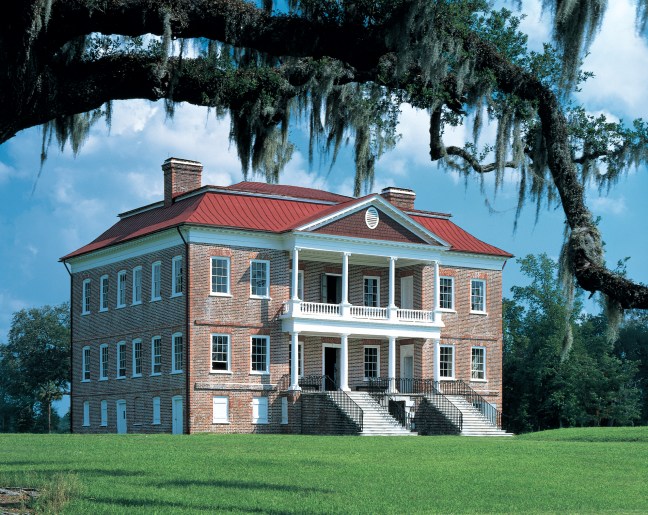
Drayton Hall, Georgian-Palladian style plantation house
constructed in 1738 near Charleston, South Carolina

This is the first scene of my play, A Sword Unsheathed, originally written in French and translated into English for publication on the blog. At only eleven lines, it’s the shortest scene in the play. Hopefully these first few lines will pique your interest! The original French is found at the end of the post. (Read in French.) Please read the historical note here.

Voici la première scène de ma pièce, Un sabre dégainé, écrite à l’origine en français et traduite en anglais pour publication sur ce blog. Ayant seulement onze répliques, c’est la scène la plus brève de la pièce. J’espère que ces premières lignes piqueront votre intérêt ! L’original en français se trouve à la fin de l’article. (Lire en français.) Veuillez lire ici la note historique.

SCENE 1

The Characters

BENJAMIN HUGER, plantation owner, about 35 years old
FRANCIS HUGER, his son, about 7 years old
ROBERT, a slave

The year 1777. A cotton and rice plantation, on the veranda of the plantation house. A summer evening at dusk, hot and humid, chirping cicadas. Benjamin is seated on a rocking chair stage left, smoking his pipe. Francis stands downstage right, looking into the distance. Continue reading Act One, Scene 1

“I can’t believe it’s not butter!”

SPOILER ALERT: This post may contain spoilers for fans of Mad Men who aren’t up to date with the episode that aired on May 12, 2013.

So, I’ve been watching Mad Men pretty religiously since the sixth season debuted on April 7, but I have to be honest: I’m having a tough time getting into this season. There are a few things that are bugging me, but nothing more so than Don Draper‘s affair with his neighbor, Sylvia Rosen. I’m so over that storyline that every time I see Linda Cardellini onscreen now, I just sigh and roll my eyes. Thankfully, though, it seems the tryst may have finally met its long overdue death. There have been a few bright spots for me so far this season, of course: the wake for Roger‘s mother in the season premiere was one. The history nerd that I am, I’m also digging the show’s tangential nods to the events of 1968. It’s given me an opportunity to discuss that turbulent period of US history with Michel: from Tet, to the assassination of Martin Luther King, Jr., to Chicago ’68. But even though Sunday’s episode ended with the assassination of Bobby Kennedy, I found myself talking about a completely different history, a French history … the history of margarine. Continue reading “I can’t believe it’s not butter!”

Enter Stage Left

Molière in the role of Caesar in Corneille’s “The Death of Pompey,”
by Nicolas Mignard

If you’re a fan of je parle américain, you’ve probably noticed a recent decline in the frequency of my posts. That’s primarily because I’ve been so busy with what has to be my final semester of French language classes. Instead of writing for je parle américain, I’ve been summarizing French news articles, drafting letters to imaginary newspaper editors about the controversies of the day, outlining arguments for oral presentations, synthesizing multipage French documents into concise 100-word summaries without omitting anything essential … oh, and writing a play in French. Continue reading Enter Stage Left

Remem-ber, Remem-ber the 8th of May

Today is one of four French national holidays during the month of May, including May Day (May 1), Ascension (May 9 this year), and Pentecost Monday (May 20 this year). May is, it seems, the most “holidayed” month of the year for the French. Given that it’s usually the most beautiful month of the year in Paris, that’s just fine with me!

If you’ve ever wondered why May 8 is a holiday here, read on

(Originally published May 8, 2012)

je parle américain's avatarje parle américain

May is a month chock full of holidays here in France. Just last week, we celebrated May Day. Since it fell on a Tuesday, lots of French took Monday off as well so they could have a four-day weekend — that’s what the French call faire le pont (“to make the bridge”). This year, May is also the month that brings us such Christian holidays as Ascension on May 17 and Pentecost on May 27. While the latter is no longer a public holiday in France, the former is … but let’s not get into a discussion about laïcité, okay? Instead, I’m writing about today’s holiday:

le 8 mai

A blogger friend of mine noted in a post today that it was “Victory Day” … but no one could tell her exactly which victory it commemorated. Being the history nerd that I am, I passed along the needed…

View original post 503 more words

Second Breakfast

The inspiration for this post — believe it or not — was an ultrasound I had yesterday. Don’t worry: It turns out that I’m not pregnant nor do I have an appendicitis or a hernia. What I feared might be a more serious condition was, in fact, just an infection from a ninja spider bite. But that’s a story for another day, because you want to know what in the world that has to do with “second breakfast.” Continue reading Second Breakfast

The rabbit of Easter. He bring of the chocolate.

Well, Easter is right around the corner, so it came as no surprise this morning when my French oral expression teacher broached the topic of the holiday with my class. Since we all come from somewhere other than France, the logical first question was:

“Do you celebrate Easter in your home country
and, if you do, what are the traditions there?” Continue reading The rabbit of Easter. He bring of the chocolate.

From a South Carolina Sidewalk to a Paris Museum

I am absolutely intrigued by Paris’s street art: those sometimes ephemeral, sometimes witty, sometimes political, but always free exhibitions that are found on almost every city block in this Mecca of artists. In fact, this is my third post on je parle américain about street art in as many months because I’m constantly stumbling across new pieces. A few weeks ago, though, I started to ask myself whether this love affair with street art has deeper roots than just my experiences here in Paris. Continue reading From a South Carolina Sidewalk to a Paris Museum